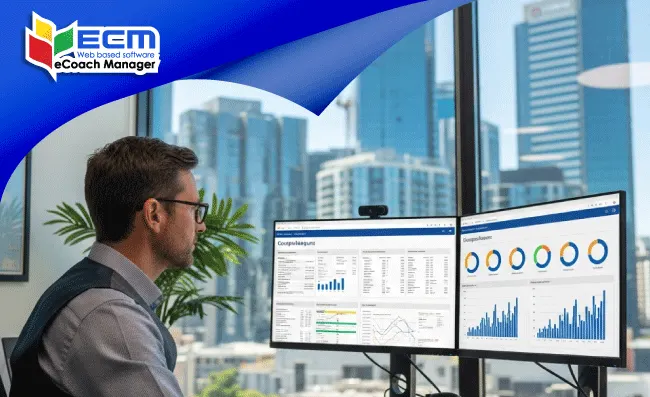
Introduction: Automation Is Redefining Fleet Management
Across Australia, the UK, and New Zealand, transport companies are turning to automation to manage fleets more safely, efficiently, and profitably.
What was once considered futuristic is now standard practice: automated scheduling, live vehicle monitoring, driver safety alerts, and digital compliance reporting are transforming daily operations.
At eCoachManager, we’ve surveyed and worked with hundreds of operators to understand how automation is reshaping the transport industry.
Here’s what they’re saying — the real-world benefits, challenges, and lessons from companies already using smart systems.
1. “We’ve Cut Administration Time by 40%” — Regional Coach Operator, NSW
For many transport businesses, manual scheduling and paper-based reporting have always been major bottlenecks.
Fleet automation now handles:
- Job allocation
- Vehicle tracking
- Invoicing and timesheets
- Maintenance alerts
One Sydney-based operator told us:
“Before eCoachManager, we spent two days each week just managing spreadsheets. Now it’s all automatic — bookings sync to routes, drivers get updates instantly, and invoices generate themselves.”
2. “Our Compliance Reporting Is Practically Hands-Free” — UK School Transport Provider
Compliance and audit preparation once meant hours of form-filling and risk documentation.
Automation has changed that entirely.
eCoachManager’s built-in tools automatically record:
- Vehicle safety inspections
- Licence and insurance expiry alerts
- Driver working hours
- Maintenance records
“Now everything we need for compliance is logged digitally,” says a UK-based school transport director.
“It saves us from missed renewals and gives us peace of mind for audits.”
3. “Real-Time Alerts Prevent Costly Mistakes” — Logistics Fleet, Queensland
Fleet managers no longer rely on drivers to manually report incidents.
With automated systems, alerts for speeding, unscheduled stops, or mechanical faults appear instantly.
“We caught a brake issue before it turned serious,” notes one Queensland logistics manager.
“The alert came through mid-route, and we diverted the vehicle safely. Automation genuinely saves lives.”
4. “Driver Performance Is Now Data-Driven” — Passenger Transport Company, Victoria
Driver safety used to be subjective, based on feedback and observation. Automation now provides objective insights.
Fleet managers can view:
- Speed, braking, and acceleration patterns
- Fatigue and rest-time data
- Driver scorecards with trends over time
“We use eCoachManager’s driver reports in our monthly reviews,” says a Victorian transport owner.
“Accidents are down, and staff feel more supported because they can see their progress.”

5. “Scheduling Multiple Jobs Is Effortless” — Tourism Operator, Gold Coast
Handling high-volume bookings for tours and transfers can overwhelm manual systems.
Automation simplifies it all.
Automated Scheduling Benefits:
- Smart route assignment based on location
- Avoids double-booking
- Real-time driver updates via mobile app
- Instant notifications for changes
“During peak season, we manage 200+ bookings daily,” says the operator.
“Automation keeps everything synchronised between dispatch, drivers, and customers.”
6. “We’re Saving Thousands on Maintenance” — Long-Haul Charter Business, Auckland
Fleet automation enables predictive maintenance — preventing costly breakdowns.
eCoachManager’s vehicle monitoring system sends service alerts based on:
- Mileage thresholds
- Engine diagnostics
- Brake and oil sensor data
“Our repair costs dropped by nearly 30%,” says an Auckland coach operator.
“The system warns us before something goes wrong, not after.”
7. “Customers Notice the Difference” — Corporate Shuttle Provider, London
Automation isn’t just an internal improvement — it enhances customer experience.
Live tracking, automated notifications, and digital ticketing make journeys more transparent and professional.
“Clients love getting automatic ETA messages,” says a London shuttle operator.
“It gives us an edge — reliability backed by technology.”
8. “We’re Finally Using Data to Make Better Decisions” — Bus Fleet Manager, Melbourne
Automation collects mountains of data — and turns it into insight.
Operators now use analytics dashboards to:
- Identify underused routes
- Measure vehicle utilisation
- Forecast driver schedules
- Track carbon output for ESG reporting
“We used to guess which routes were least efficient,” says the Melbourne fleet manager.
“Now, we can prove it with data — and optimise accordingly.”
9. “Automation Helped Us Scale Without Hiring More Staff” — Charter Group, Perth
Expanding fleets often meant expanding admin teams. Automation breaks that link.
“We doubled our vehicles last year,” says a Perth-based transport director.
“But thanks to eCoachManager’s automation, we didn’t need extra office staff. The system scales effortlessly with growth.”
What Operators Agree On: The Benefits Are Clear
Category | Impact of Automation |
Administration | Up to 40% reduction in manual workload |
Compliance | Near 100% digital audit readiness |
Safety | Faster response to incidents |
Maintenance | 20–30% reduction in repair costs |
Customer Satisfaction | Higher punctuality and transparency |
Automation turns complex logistics into predictable, efficient workflows — letting teams focus on service, not spreadsheets.
Challenges Operators Mention
Even with all the benefits, some operators shared a few lessons from their automation journey:
- Staff training is essential — digital adoption takes time.
- Integration with legacy systems may need IT support.
- Data overload can occur without clear dashboards or KPIs.
The good news? eCoachManager’s onboarding and customer support team guide operators through every step — from configuration to analytics training.
FAQs: Fleet Automation with eCoachManager
What does fleet automation include?
It automates scheduling, driver management, vehicle tracking, compliance, and reporting in one digital system.
Is automation expensive to implement?
Not with cloud-based platforms like eCoachManager — there’s no hardware setup, and pricing scales by fleet size.
Can automation work with mixed fleets?
Yes — it supports buses, coaches, vans, and specialised vehicles.
How secure is fleet data?
All information is encrypted, stored securely in the cloud, and compliant with GDPR and Australian privacy standards.
How long does implementation take?
Most operators are up and running within one to two weeks, depending on fleet size.
Can automation help with ESG goals?
Absolutely — it tracks emissions, optimises routes, and supports sustainability reporting.
Conclusion: Automation Is No Longer Optional — It’s Essential
Fleet automation is transforming transport operations across the world — saving time, improving safety, and driving profitability. The eCoachManager (eCM) VMS system enables a shift from passive compliance reporting to proactive, data-driven incident prevention, transforming risk management from a regulatory necessity into a strategic advantage.
As one operator summed it up perfectly:
“Automation didn’t replace people — it made them better at what they do.”
Because the future of fleet management isn’t manual — it’s automated.